How to Prepare for a Brand Photoshoot as a Small Business Owner
If you have booked a brand photoshoot, or you are thinking about booking one, there is a very good chance your brain has already opened seventeen tabs at once.
What do I wear?
Where should we shoot?
Do I need props?
Should I make a Pinterest board?
What if I look awkward?
What if I forget how my face works the second a camera appears?
Honestly, all very normal.
A brand photoshoot can feel a little intimidating when you are a small business owner, especially if you are used to being behind the scenes rather than in front of the camera. You might know that you need better photos for your website, social media, launch content or marketing, but knowing how to prepare for a brand photoshoot can feel like a whole separate job sitting on top of the already large pile of things you are trying to run.
The good news is that you don’t need to turn up with a military-level spreadsheet, three suitcases of outfits and a moodboard so detailed it could be submitted as a dissertation.
You just need a little bit of direction and a sense of what you actually need your images to do for your business.
Brand photography works best when it feels intentional but not stiff, planned but not overproduced, and polished without looking like someone has stolen your personality and replaced it with a beige content calendar.
So, if you are wondering how to prepare for a brand photoshoot as a small business owner, this is your guide.
Start with why you need the photos
Before you think about outfits, locations or props, start with the reason you are booking the shoot in the first place.
Your brand photos should not just exist because you feel like you should probably have some. They should have a job to do.
Are you launching a new website?
Are you refreshing your social media?
Are you introducing a new service?
Are you creating content for a product launch?
Are you updating your About page?
Are you trying to look more professional and less “I took this in a rush before a Zoom call”?
When you know why you need the images, the whole shoot becomes easier to plan. A website refresh might need banner images, About page portraits, detail shots and service page images. A social media content shoot might need more variety, more personality and more relaxed behind-the-scenes moments. A launch might need images that feel exciting, polished and campaign-ready.
This is why brand photography for small business is not just about taking pretty pictures. It is about creating a useful visual archive that supports the way your business shows up online.
The clearer we are on what the photos need to do, the more useful your final gallery will be.
Think about where the images will be used
This is one of the most helpful things you can do before a brand photoshoot, because it turns photo ideas into decisions.
Think about the places your images need to appear across your business.
Your website homepage
Your About page
Your services page
Your contact page
Instagram posts
Instagram stories
Pinterest graphics
Email newsletters
Blog posts
Launch content
Client guides
Press features
LinkedIn posts
Sales pages
Digital products or course materials
Once you have a list of where the photos might be used, you can start thinking about what shapes and styles of images you need. For example, website banner images often need space around the subject so text can sit over them nicely, while Instagram images can be closer, warmer and more detailed.
You might need some images where you are looking at the camera, some where you are working naturally, and some that do not include your face at all.
Those in-between images are often the unsung heroes of a brand photography gallery. Hands on a laptop, notes on a desk, products being wrapped, tools in use, coffee beside a notebook, fabric, packaging, flowers, candles, camera gear, sketchbooks, samples, laptops, whatever makes sense for your world.
They might seem small, but they are the images that make a website or social feed feel full and considered.
Create a simple moodboard
A moodboard is helpful, but it does not need to become a visual identity crisis with 842 pins and no clear direction.
The aim of a moodboard is not to copy someone else’s shoot. It is to understand the feeling you want your images to have.
Start by gathering images that reflect the atmosphere you are drawn to. This could include colours, locations, poses, lighting, textures, outfits, interiors, editorial photography, product styling, website layouts or even film stills. You are looking for patterns rather than perfection.
Maybe you keep saving images that feel warm, soft and nostalgic. Maybe everything is clean, minimal and editorial. Maybe you are drawn to darker tones, candlelight, old books, handwritten notes and images that look like they belong in a beautiful archive, which I would personally never discourage for very obvious Studio Evermore reasons.
Once you have a handful of images, ask yourself what they have in common.
Are they light and airy?
Are they warm and earthy?
Are they polished and refined?
Are they playful and colourful?
Are they moody and cinematic?
Are they relaxed and natural?
Are they detailed and tactile?
This helps guide the shoot without making it feel like we are trying to recreate one exact image from Pinterest, because that way lies madness and usually a chair that nobody can find in real life.
Choose outfits that feel like you, but slightly more considered
Outfits are often the part people stress about most, which makes sense because suddenly your wardrobe starts behaving like it has personally betrayed you.
The best advice is to choose outfits that feel like you on a good day. Not costume-you, not imaginary version of you who apparently wears linen suits to answer emails, but real you with a little extra intention.
Think about your brand colours, the locations we are shooting in and the overall feeling you want the images to have. If your brand is soft, calm and neutral, you might lean into creams, browns, soft greens, muted blues or warm textures. If your brand is bold, expressive and creative, stronger colours or statement pieces might make more sense.
Try to avoid anything that feels uncomfortable, distracting or so unlike you that you will look at the photos later and wonder who that person is and why she has borrowed a blazer from a networking event in 2016.
A few outfit tips that usually help:
Bring more than one option so we can create variety
Choose clothes that fit well and let you move naturally
Think about layers, jackets, cardigans or accessories for easy changes
Avoid tiny busy patterns if they might distract on camera
Make sure shoes work with the location and the full outfit
Steam or iron anything that creases dramatically
Wear something you can sit, stand, work and breathe in
If you are not sure what to wear, lay your outfits out together and take a quick photo of them before the shoot. This helps you see if they sit nicely as a collection, which matters because your final gallery should feel consistent rather than like three different people attended on your behalf.
Pick locations that make sense for your brand
Your location should support the story your brand is telling.
For some small business owners, that might be your studio, workspace, treatment room, shop, home office, favourite café, rented location, co-working space or somewhere outdoors that feels aligned with your brand. For others, it might be a mix of spaces so the gallery has more variety.
A good brand photography location should feel visually aligned, practical to shoot in and relevant to the kind of work you do.
If you are a maker, your workspace might be perfect because it shows your process and materials. If you are a coach or service provider, a calm interior space might help your images feel warm and approachable. If you are a creative business owner, a rented studio or editorial-style location might give your images a more polished campaign feel.
When choosing a location, think about light, space, colours, clutter, parking, permissions and how much variety we can create there. A beautiful location is lovely, but if it has one tiny dark corner and nowhere to put your things, it may not be the gift we hoped for.
The best locations make the shoot feel natural, not forced.
Bring props that tell part of the story
Props can be really useful in brand photography, but only when they make sense.
The aim is not to bring every vaguely aesthetic object you own and hope for the best. The aim is to choose pieces that help tell the story of your business, your process or your personality.
Good props might include:
Your laptop
Your notebook or planner
Pens, pencils or creative tools
Products or packaging
Fabric, samples or materials
Books or magazines
A favourite mug or glass
Business cards or printed materials
Tools of your trade
Flowers, candles or styling details
Client materials
Sketches, notes or drafts
Anything you regularly use in your work
For product-based businesses, props can help create context and atmosphere around the products. For service-based businesses, props can make working shots feel more natural and give your hands something to do, which is always welcome when the alternative is suddenly forgetting where arms go.
The best props are the ones that feel connected to your business rather than randomly decorative. If it would naturally appear in your work, your space or your brand world, it probably belongs.
Prepare a loose shot list
A shot list does not need to be stiff or overly complicated, but it is very helpful to have a sense of the images you know you need.
Think about the essentials first.
A profile photo
A relaxed About page portrait
A working shot
A few website banner images
Detail shots
Behind-the-scenes images
Images with space for text
Product or service-related images
Social media content
Any specific launch or campaign images
If you have a website, go through each page and think about what photos would make it feel more complete. Your homepage might need a strong hero image, your About page might need something warm and personal, your services page might need images that show your process, and your contact page might need something inviting and calm.
You can also think about the captions or topics you often post about. If you regularly talk about your process, your values, client experience, behind-the-scenes work, product details or business journey, those are all useful things to photograph.
The goal is not to control every second of the shoot. The goal is to make sure your final gallery gives you images you can actually use
Think about your brand story
Brand photography is not only about what you look like. It is about what your business feels like.
Before your shoot, spend a little time thinking about the story behind your brand.
Why did you start?
What do you want people to feel when they find you?
What makes your work different?
What details matter to you?
What kind of clients or customers are you hoping to attract?
What do people often misunderstand about what you do?
What parts of your process are worth showing?
You do not need to have poetic answers polished and ready, although obviously I will never object to a tiny bit of poetic drama. You just need to understand the emotional world around your business.
If your brand is about calm, safety and care, your images should feel very different from a brand that is about bold creativity, movement and energy. If your work is detailed, handmade and slow, the shoot should capture that. If your business is warm, funny and human, your images should not look cold and corporate.
Your photos should help people recognise your brand before they have read a single caption.
Do a little practical prep the day before
The day before your shoot is not the time to reinvent your entire brand, change your hair, buy seven emergency outfits and decide you now want everything to be “coastal grandmother but haunted library.”
Keep it simple.
Steam your clothes
Pack your props
Charge your laptop
Clean your products
Gather any printed materials
Check your travel time
Confirm the location
Bring water and snacks
Put everything in one place
Send any last notes over to your photographer
If products are involved, bring more than one of each item if possible, especially if packaging can get marked, labels can wrinkle or anything is reflective, delicate or easily damaged.
If we are photographing your workspace, give it a tidy, but do not strip it of all personality. A brand space should feel considered, not surgically empty. Nobody needs to believe you live in a world without cables, receipts or half-finished cups of tea, but we also do not need the emergency drawer contents making a surprise appearance.
Let go of needing to be “good” on camera
This is the part I wish every small business owner knew before a brand photoshoot.
You do not need to be good on camera.
That is not your job.
Your job is to show up as yourself, and my job is to guide you, notice the best light, help you move naturally, make tiny adjustments, capture the details and create images that feel like you without making the whole thing weird.
Most people feel awkward at the start. That is not a sign that the shoot is going badly. That is just the first ten minutes of being perceived by a lens, which is a strange human experience and should probably come with biscuits.
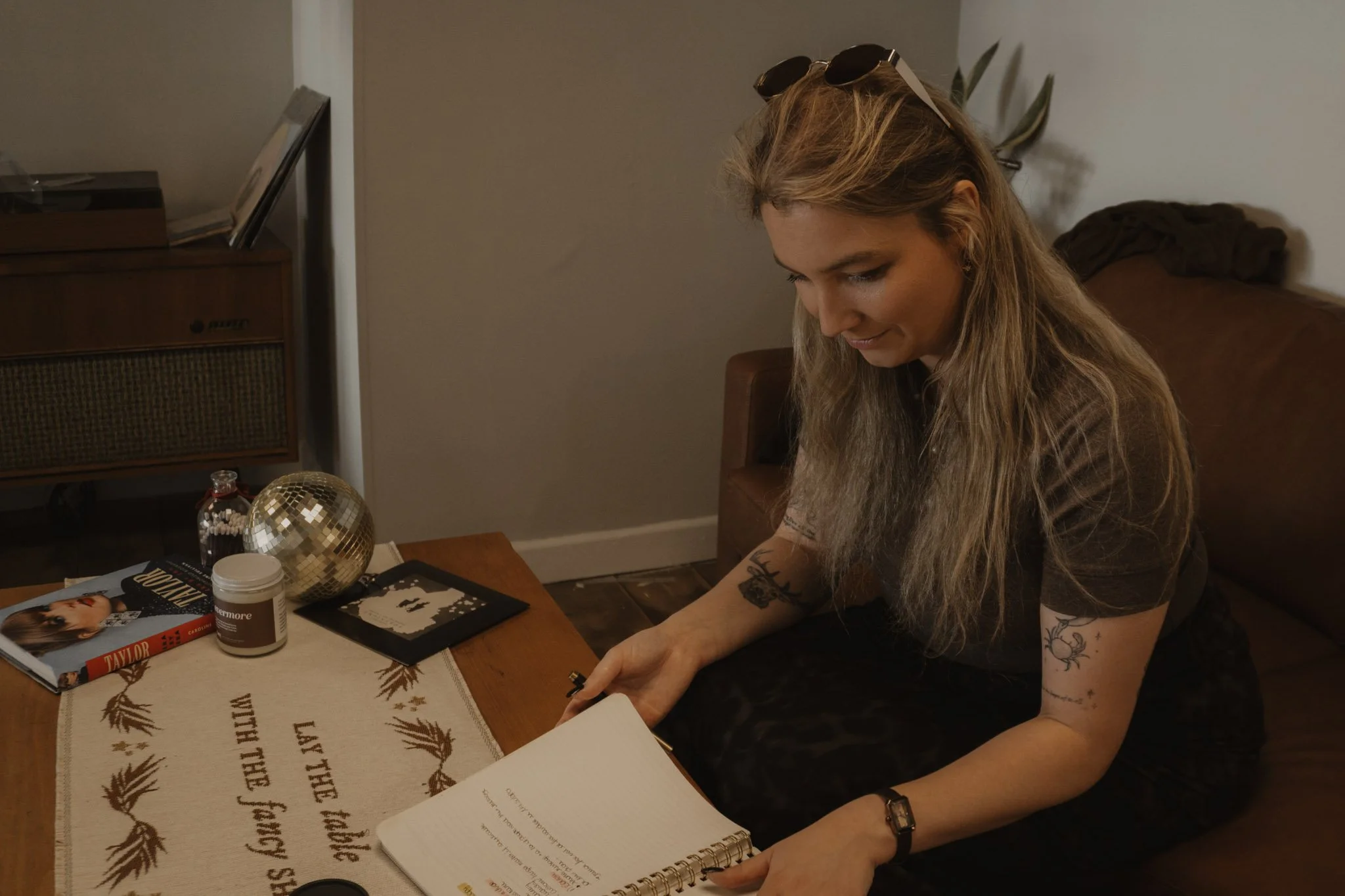
A good brand photoshoot should ease you in. We can start with simple working shots, details, hands, movement, walking, sitting, looking down, making coffee, opening a notebook, arranging products or doing something that feels familiar before moving into more direct portraits.
You don’t need to arrive as a natural model. You just need to arrive as the person behind the business.
That is more than enough.
What to send your photographer before the shoot
If you want to make your brand photoshoot feel smooth, send your photographer the useful bits in advance.
This might include:
Your website
Your Instagram or social links
A moodboard
Brand colours
A rough shot list
Location details
Outfit ideas
Product information
Any must-have images
Any worries or things you feel self-conscious about
Where you plan to use the photos
This gives your photographer the context they need to create images that fit your business properly. It also means you are not trying to explain everything on the day while holding a tote bag, three jackets, a laptop charger and a mild sense of panic.
The more context we have before the shoot, the more relaxed and intentional the session can feel.
A simple brand photoshoot preparation checklist
If you want to make your brand photoshoot feel smooth, send your photographer the useful bits in advance.
This might include:
Your website
Your Instagram or social links
A moodboard
Brand colours
A rough shot list
Location details
Outfit ideas
Product information
Any must-have images
Any worries or things you feel self-conscious about
Where you plan to use the photos
This gives your photographer the context they need to create images that fit your business properly. It also means you are not trying to explain everything on the day while holding a tote bag, three jackets, a laptop charger and a mild sense of panic.
The more context we have before the shoot, the more relaxed and intentional the session can feel.
The whole point is to make your business feel more like itself
Preparing for a brand photoshoot is not about becoming someone else for the day.
It is about creating space to show the business you have already been building, with more intention, more clarity and better lighting than your camera roll can usually manage on a Tuesday afternoon.
Your brand photos should help your business feel seen, understood and remembered. They should give you images that work across your website, social media, marketing, launches and future content, without making you feel like you have to perform a version of yourself that only exists on Pinterest.
As a small business owner, you already carry the story of your brand. A good brand photoshoot simply helps other people see it too.
Ready to prepare your own brand photoshoot?
If you are looking for brand photography in Portsmouth, Southsea, Hampshire or beyond, Studio Evermore creates thoughtful, editorial brand photography for founders, creatives and small businesses who want images with feeling, story and intention.
The Chairman’s Story is the Studio Evermore brand photography experience, created to help you build a visual archive for your website, social media, marketing and next chapter of your business.
If your current images no longer feel like your brand, or you are ready to create a gallery that feels more considered, personal and useful, I would love to help you open the file.
Ready to start planning your brand photoshoot?
Explore The Chairman’s Story, the Studio Evermore brand photography experience, or get in touch to begin your own visual archive.